When the bottleneck in an industry shifts from engineering to finance, the people who control the money tend to change the conversation. That appears to be the logic behind Ramsey Financial Group’s latest leadership move, which puts a veteran investor at the helm of a strategy designed to reshape how space companies are funded.
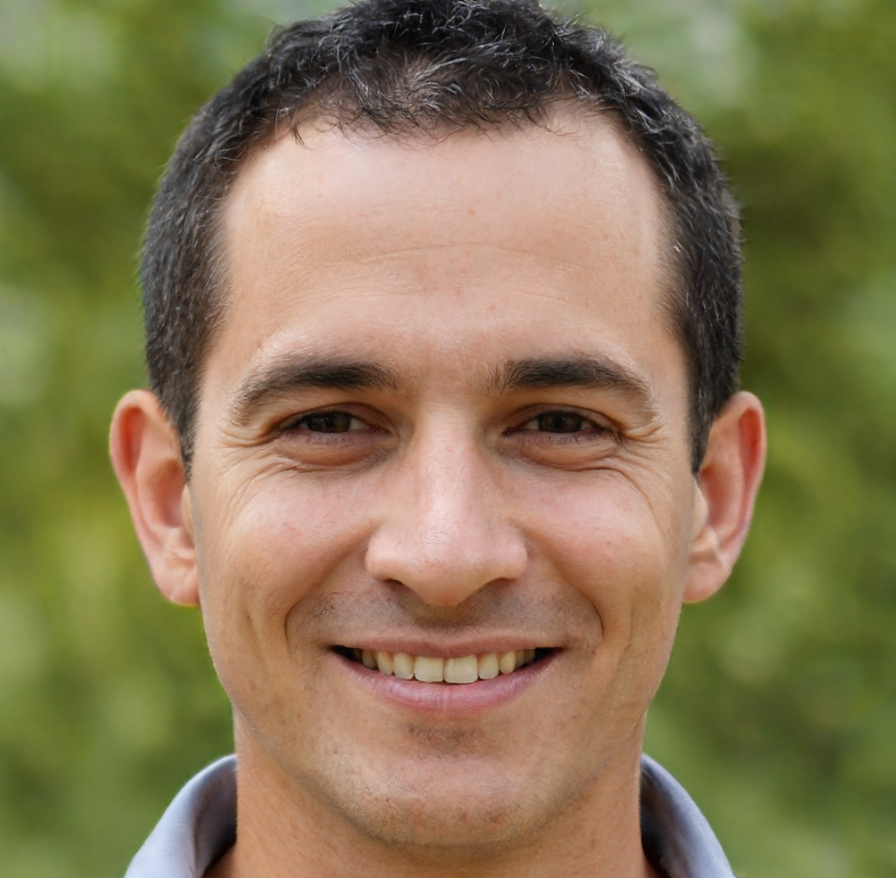
Ramsey Financial Group, the Houston-based entity through which the Womack and Crawford families manage their investments, has promoted Meagan Murphy Crawford from principal to partner. In her expanded role, Crawford will spearhead the firm’s newly formed space capital stack initiative, a five-layer financing framework the company believes can address a critical gap in the commercial space sector.
“Ramsey Financial Group is now the entity through which both the Womack and Crawford families administer and develop their investments,” said Leo B. Womack, Founder and Chairman of Ramsey Financial Group. “Meagan has helped administer our investments across space, agriculture technology, and artificial intelligence throughout the last decade. Naming her a partner adds her as a deciding member on the full range of our investment activity, which also includes energy, life sciences, and real estate. It also aligns the entire group with her space capital stack mandate.”
The space capital stack is the five-layer structure outlined in “Beyond Venture: Space Needs a Complete Capital Stack,” a white paper the firm sponsored earlier this year. The paper’s central thesis is that the industry’s primary obstacle has moved from the launchpad to the balance sheet. Currently, venture equity is the only financing tool accessible to most space companies, which means founders and early investors face heavy dilution through successive funding rounds even after technical risks have diminished. The paper also notes that operators often self-insure entire satellite constellations and that startups unintentionally become real-estate developers around launch corridors.
The five layers of the stack include data and intelligence through Off Earth Data, early-stage equity through Starchart Ventures, private credit through a vehicle slated for formation in 2027, infrastructure development through SpacePort Fund, and insurance through Alera Group Emerging Industries. Off Earth Data has tracked 3,268 space companies as of Oct. 23, 2026, representing the base of firms this stack is designed to serve.
“Every round of venture capital a company raises costs the founders and early investors significant equity,” said Crawford. “In other industries, credit, infrastructure development, and insurance exist so lower-cost capital can arrive as the risk falls, and the company reaches revenue and exit with more early equity intact for those who took the highest risks. These mechanisms have largely been missing from the space industry, and building them is my work at Ramsey Financial Group.”
The white paper’s illustrative model highlights the stakes. A space founder who raises four equity rounds retains 19 percent of the company, while a founder who gains access to a credit facility from first revenue holds 40 percent. That 21-point difference hinges entirely on whether a lender is willing to finance a space asset. While launch insurance is mature and competitively priced, coverage drops off sharply once hardware reaches orbit and begins generating revenue — precisely when lenders need insurable collateral. The paper reports that 95.6 percent of satellites lack post-launch coverage as of Aug. 23, 2026.
The infrastructure gap extends to the ground as well. Aerospace payroll in Brevard County, home to the Space Coast, grew 89 percent from 2017 to 2023, according to the Economic Development Commission of Florida’s Space Coast. Yet housing permits in the region fell 29 percent from 2023 to 2025, based on US Census building permit data. Off Earth Data’s licensed-spaceport registry lists 20 US sites as of Oct. 23, 2026, and each of those regions faces its own infrastructure shortfalls.
“This family has put its own capital behind frontier industries since before there was a space economy to invest in,” said L. Barton Womack, Managing Director of Ramsey Financial Group. “Making Meagan a partner is how that continues. The capital stack she is building is the tool the next generation of these companies will need.”
Crawford continues to serve as a principal of SpacePort Fund, founder of Starchart Ventures, and an investor in and advisor to Off Earth Data. The full “Beyond Venture: Space Needs a Complete Capital Stack” white paper is available at https://meagancrawford.com/capital-stack.html.
About Ramsey Financial Group
Ramsey Financial Group, LLC is the Houston-based entity through which the Womack and Crawford families administer and develop their investments in space, agriculture technology, artificial intelligence, energy, life sciences, and real estate, and through which they offer co-investments to aligned family offices, angel networks, and institutional investors. A group of industry experts supports the firm’s due diligence and the management of its portfolio. Ramsey Financial Group, LLC is not registered with the SEC or any state as an investment adviser or broker-dealer. The firm is online at https://ramseyfg.com.
Meagan Murphy Crawford
Ramsey Financial Group
Press@MeaganCrawford.com
Visit us on social media:
LinkedIn
Why it matters: The promotion signals a strategic bet that space financing needs to evolve beyond venture capital alone. If the capital stack model gains traction, it could fundamentally alter how early-stage space companies preserve founder equity and access the full range of financial tools that other industries take for granted.