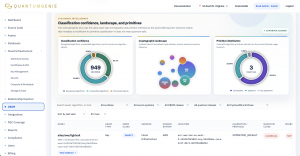
The scramble to prepare for quantum computing’s eventual ability to break today’s encryption has long suffered from a lack of structure. QuantumGenie, Inc., an AI-native platform focused on post-quantum cryptography discovery and remediation, is attempting to impose order on that chaos with a newly unveiled nine-stage Enterprise Engagement Lifecycle. The framework offers organizations a defined, repeatable path from initial cryptographic visibility to long-term governance — a notable step in a field often fragmented across various tools, standards bodies, and ad-hoc migration efforts.
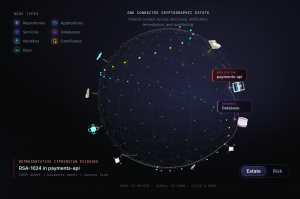
QuantumGenie: AI-Native Cryptographic Discovery, CBOM, Post-Quantum Risk & Remediation
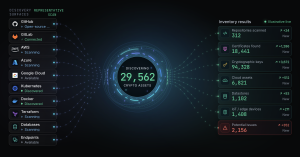
The new enterprise lifecycle combines agentless connectors, endpoint telemetry, a 60-field CycloneDX-compatible CBOM, automation, and partner delivery.
Agentless discovery alone is like sweeping a room while leaving out the corners. Combining endpoint agents with agentless connectors provides the comprehensive signals PQC migration requires.”— Srijan Dhare, Founder and CEO, QuantumGenie
Announced on October 13, 2026, from New York, NY, the lifecycle is designed to guide enterprises through nine connected stages. These begin with Discovery, which identifies cryptographic assets, algorithms, certificates, keys, repositories, services, and runtime signals. The process continues through CBOM preparation, where findings are normalized into an evidence-backed Cryptographic Bill of Materials with full provenance. Assessment follows, evaluating quantum vulnerability, crypto-agility, dependencies, data sensitivity, and operational impact.
Subsequent stages include defining a Target architecture for the future-state cryptographic environment, running a Proof of concept to validate evidence quality and security controls, and building a Roadmap to prioritize remediation waves, owners, milestones, budgets, and decision gates. A Pilot stage then deploys to representative systems to validate operating procedures, leading to Full-scale rollout across approved connectors, endpoint cohorts, and workflows. The final stage is Continuous monitoring and CBOM maintenance, which refreshes evidence, monitors drift, and verifies remediation efforts.
QuantumGenie’s platform is engineered to support all nine stages within a single connected ecosystem. However, the Target architecture and Roadmap stages remain deliberately expert-led, as they hinge on an organization’s specific risk appetite, operating model, budgets, dependencies, and change windows. For the other seven stages, QuantumGenie claims it can automate up to approximately 80 percent of the repeatable workflows — including discovery, normalization, assessment, validation, rollout telemetry, and continuous monitoring — while preserving human review and approval checkpoints.
A central tenet of the approach is that comprehensive cryptographic discovery demands multiple evidence sources. QuantumGenie pairs its CipherEdge endpoint telemetry agents with agentless connectors that leverage a customer’s existing Microsoft Defender and CrowdStrike Falcon deployments, cloud APIs, source-code repositories, HSM and KMS infrastructure, PKCS #11 interfaces, and network SPAN telemetry. While CipherEdge delivers the deepest local evidence on device specifics, file-signing certificates, and local cryptographic libraries, the agentless sources broaden coverage without additional endpoint rollouts. EDR platforms contribute device and software inventory, cloud APIs expose managed keys, repositories reveal source-level crypto usage, HSM integrations show managed object metadata, and SPAN traffic provides passive evidence of TLS negotiations and database connections.
All evidence is normalized into a canonical model and processed by CipherScan. The company’s Relationship Explorer then connects applications, services, servers, certificates, keys, protocols, libraries, owners, and business context. This allows enterprises to see both a cryptographic asset and everything that depends on it. QuantumGenie’s stated gold standard is answering at this granular level: “This netbanking application running on Server 7 uses this TLS certificate containing an RSA-2048 key, issued by AWS and expiring in 69 days, to communicate with this authentication service running on Server 3 over TLS 1.2.”
The resulting CBOM is CycloneDX-compatible and exportable in CSV, JSON, PDF, and XLS. The enterprise version contains 60 fields across eight categories: Identity; Ownership and Business Context; Cryptographic Detail; Certificate Detail; Protocol and Library; Discovery and Evidence; Quantum and Risk; and Migration and Governance. This structure transforms a simple inventory into an operational migration record with evidence, ownership, dependency, risk, target-state, and validation context embedded.
QuantumGenie is applying the same structured thinking to its go-to-market strategy. Its Partner Program offers resellers, system integrators, and managed security service providers distinct paths via five Prestige Levels: Authorized, Select, Premier, Elite, and Strategic. The model ties revenue performance to net-new or repeat customers, certified engineering capacity, production deployments, and active managed customers. The company is already supporting engagements in the Middle East and has authorized a Big Four global professional-services organization to market, propose, and implement QuantumGenie products.
About QuantumGenie
QuantumGenie, Inc. is an AI-native post-quantum cryptography platform for cryptographic discovery, CBOM preparation, risk attribution, migration planning, remediation, and continuous monitoring. Its suite includes CipherScan, CipherEdge, CipherNova, the Causal Security Engine, Relationship Explorer, and Security World Model. More information is available at quantumgenie.ai.
###
Srijan Dhare
QuantumGenie Inc.
+1 339-927-7745
srijan@quantumgenie.ai
Visit us on social media:
LinkedIn
YouTube
Other
QuantumGenie Causal Risk Triage sorts cryptographic vulnerabilities by risk & provides a structured path from security findings to CipherNova™ remediation.
Why it matters: As quantum computers edge closer to breaking RSA and ECC, enterprises can no longer rely on ad-hoc discovery tools to manage their cryptographic exposure. QuantumGenie’s lifecycle provides a formal, evidence-driven framework that could become a benchmark for how organizations plan, execute, and sustain their post-quantum migration efforts — shifting the conversation from “if” to “how” they will achieve crypto-agility.