AI agents are quickly moving from experimental pilots to full production environments, where they handle sensitive tasks like reading emails, querying databases, and calling APIs on behalf of employees. That expanded access also creates a fresh attack vector: instead of breaking into the application itself, attackers can slip malicious instructions into a document, webpage, or tool response, tricking the agent into actions it was never designed to perform. At Oracle AI World today, Waratek, a runtime application security provider, answered that threat with the launch of Waratek AI Phylax, a product that applies proven immutable-rule protection to Java-based AI agents in real time.
Waratek unveils new product that applies proven immutable-rule runtime protection to AI agents, blocking attempts to abuse an agent’s behavior
“Every organization deploying AI agents is asking the same question: How do we stop someone from taking control of them?” said Doug Ennis, Waratek Chair and CEO. “With Waratek AI Phylax, the answer is simple. The agent does what it was built to do, and nothing else. If anyone tries to change that, the attempt is blocked in the runtime before any compromise.”
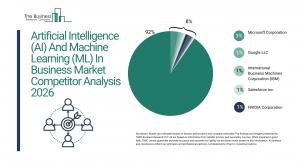
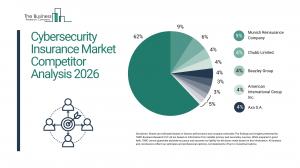
Also worth a look: AI in business market to top $1 trillion by 2030, Asia-Pacific leads regional growth and Business Research Co. projects cyber insurance to hit $51B by 2030, with Munich Re leading.
Named after the ancient Greek term for guardian, AI Phylax watches over every agent’s execution, enforcing security rules inside the runtime itself. This approach blocks attempts to alter an agent’s behavior without disrupting its legitimate functions. The product targets three common attack methods—prompt injection, tool hijacking, and goal manipulation—all of which share the same objective: changing how the agent operates. Traditional filters that scan for malicious text are probabilistic and can be bypassed with clever phrasing, but AI Phylax offers deterministic controls that don’t rely on guessing.
Built on Waratek’s established runtime security expertise, AI Phylax stops attacks at the point of execution, regardless of how the attack is worded or where it originates. The result is consistent, repeatable protection: the same security rule produces the same outcome every time, giving security teams confidence that their AI assistants and autonomous agents are shielded.
Why “Phylax”? The word (φύλαξ), pronounced fy-lax, means guardian or sentinel in ancient Greek—the one who stands at the gate and lets only the rightful through. That’s exactly the role AI Phylax plays, standing guard in the runtime to allow intended operations while turning away attempts to change them.
“We have spent years proving that the runtime is the most reliable place to stop attacks,” said Apostolos Giannakidis, CTO. “AI agents behave in non-deterministic ways, but the security controls protecting them must be deterministic and precise. AI Phylax gives security teams the same certainty for AI assistants and autonomous agents that our customers already have for their mission-critical applications.”
Waratek AI Phylax will be available for proof-of-concept testing in January 2027. Interested parties can contact Sales@Waratek.com for more information.
Waratek, a pioneer in runtime application security, protects applications from within the runtime using immutable rules, stopping attacks and remediating vulnerabilities without code changes or performance trade-offs. Enterprises in financial services, government, and other regulated industries rely on Waratek to secure business-critical systems, and AI Phylax extends that protection to AI agents. Learn more at www.waratek.com.
Doug Ennis
Waratek
+1 872-469-8605
Visit us on social media:
LinkedIn
Why it matters: As AI agents gain autonomy over sensitive data and tools, the security industry must shift from probabilistic detection to deterministic enforcement. Waratek’s runtime approach offers a blueprint for protecting these systems without sacrificing performance or requiring code changes, a model that could set a new standard for AI security in regulated industries.