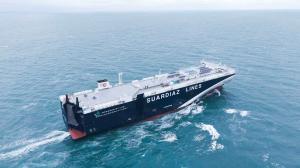
When global vehicle flows shift, ports have to keep pace — and SUARDIAZ Group is making that bet in northern Spain.
Suardiaz Atlantico
The 100,000 m² terminal will strengthen SUARDIAZ’s vehicle handling capacity in northern Spain, with the first operation scheduled for late November.
Also worth a look: ESO Ventures pushes small business support beyond holiday shopping into year-round economic strategy and Mountain BizWorks loan packet with voided checks routed through personal Gmail, records deleted.
GIJóN, SPAIN, November 27, 2026 /EINPresswire.com/ — SUARDIAZ Group is scaling up its automotive logistics presence by inaugurating a sprawling new RoRo (roll-on/roll-off) terminal at the Port of Gijón, a move that directly responds to swelling international vehicle traffic, especially from Asia.
This freshly developed facility spans 100,000 square meters and will handle its first shipment later this month. The initial operation involves the arrival and subsequent unloading of a vessel carrying vehicles, which officially kicks off the group’s activities at the site.
The terminal is outfitted with a 1,000-square-meter warehouse and is supported by two dedicated RoRo ramps managed by the Port Authority at the La Osa docks. This setup is designed to streamline the handling, management, and transit of both vehicles and rolling cargo.
Industry pressures are mounting as European port capacity strains under rising import volumes. By securing access to this specialized terminal, SUARDIAZ Group positions itself to deliver greater capacity, flexibility, and reliability to automotive manufacturers and logistics partners. The new infrastructure complements its existing Short Sea Shipping and Automotive Logistics services.
The Port of Gijón, also known as El Musel, is already a significant freight hub in northern Spain. Its robust existing port infrastructure, ample available space, and strong road and rail connections create opportunities to develop new import and export corridors, effectively linking international markets with Spain’s interior.
SUARDIAZ Group’s expansion in Gijón is expected to bolster the port’s role as an alternative gateway for the automotive logistics sector, offering a fresh entry point for cargo.
This new terminal is a key piece of SUARDIAZ Group’s broader corporate strategy, which includes modernizing its fleet, expanding its logistics infrastructure, and strengthening its international footprint by integrating maritime transport, port services, and specialized logistics solutions.
SUARDIAZ Group already manages terminals in Liverpool, Nantes, Vigo, Barcelona, Seville, Motril and Cádiz.
About SUARDIAZ Group
With more than seven decades of experience, SUARDIAZ Group has evolved from its maritime origins into an international group specialising in comprehensive logistics solutions. Today, it operates through an international network of offices and logistics centres, employs more than 1,000 professionals and provides services spanning the entire logistics chain.
Notes to editors:
For further information or to arrange an interview, please contact Sophie Foyle or Sabina Mollart-Rogerson at SeaClear Communications on sophie@seaclearcommunications.com or sabina@seaclearcommunications.com.
Sophie Foyle
SeaClear Communications
sophie@seaclearcommunications.com
Why it matters: As Asian vehicle exports surge and European ports hit capacity limits, strategic investments like SUARDIAZ’s new Gijón terminal become critical infrastructure for the continent’s supply chain. This expansion not only relieves bottleneck pressure but also positions northern Spain as a viable alternative gateway for global automotive logistics, directly impacting manufacturers’ delivery timelines and costs.