Commercial Rooftop Solar Panels: The Soiling and Shading Challenge
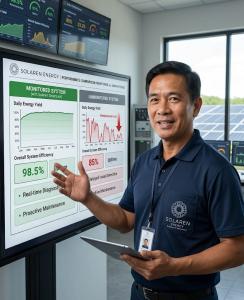
A comparison chart demonstrating how solar systems with monitoring achieve superior performance visibility, faster problem detection, and more consistent energy output relative to those without monitoring.
The official logo of Solaren Renewable Energy Solutions Corp., a DOE-accredited and PCAB-licensed solar EPC company based in the Philippines.

The majority of commercial solar installations across the Philippines generate data yet fail to act on it. Monitoring transforms that data into early warnings and measurable cost reductions.
A solar system without monitoring is like a financial portfolio without
statements. You know roughly what you put in. You have no idea what
you are actually getting out.”— Neil Pearce, CEO SolarenMANILA, MANILA, PHILIPPINES, July 21, 2026 /EINPresswire.com/ — Solaren Points to Real-Time Monitoring as the Most Overlooked Feature in Philippine Commercial Solar
Solaren Renewable Energy Solutions Corporation has identified real-time energy monitoring as one of the most consistently overlooked capabilities in commercial solar installations throughout the Philippines. Across the marketplace, operational solar systems continuously produce a wealth of performance data. Much of that data remains unexamined until an equipment breakdown or a billing discrepancy forces a review.
This monitoring gap reflects a broader pattern of hidden energy losses within commercial facilities. A recent article from AZ Big Media, titled "The Real Electrical Losses Hiding Inside Everyday Business Power," explores how unseen electrical inefficiencies quietly undermine business operations and drive up energy costs. The article can be found at https://azbigmedia.com/business/arizona-energy-industry/the-real-electrical-losses-hiding-inside-everyday-business-power/
For solar system owners, the lack of routine monitoring represents a structural underinvestment. It diminishes the financial return on the installation. It also delays the discovery of equipment deterioration, system faults, and operational inefficiencies that accumulate over time.
The irony is that the necessary hardware already exists. Most commercial grid-tied inverters sold in the Philippines come with built-in data logging capabilities. These units record generation output, DC input values, grid voltage, frequency, and fault events at intervals ranging from one to fifteen minutes, and the data is accessible through the manufacturer’s monitoring portal or a direct link to a building management system.
At many commercial sites, that data remains untouched.
Site managers typically review generation figures only after an electricity bill arrives or a visible malfunction occurs. In between those events, a solar system can operate for months with no oversight whatsoever, allowing performance degradation to go unnoticed.
The financial impact accumulates. A system producing ten percent below its expected output still incurs the same maintenance and insurance costs as one running at full capacity. The savings it fails to achieve are permanently lost. That shortfall may be invisible on any single bill, but over several years the compounded losses become significant. Soiling, new shading from vegetation or neighboring structures, individual panel degradation, and inverter underperformance can all reduce production without any indication.
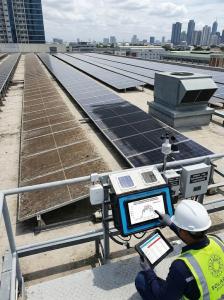
Monitoring also serves a purpose beyond tracking kilowatt hours. It enables early detection of isolation faults, arc-fault conditions, ground faults, inverter alarms, and other safety-critical events. Without active monitoring, these conditions can persist until a physical inspection occurs or a protection device activates. Real-time alerts allow system owners and service providers to investigate irregularities before they escalate into larger operational or safety problems.
"Monitoring is not an optional upgrade, and we have never treated it as one," said Neil Pearce, Managing Director of Solaren Renewable Energy Solutions Corporation. "A commercial solar system is a twenty-five year financial asset. Nobody would run any other asset of that scale without looking at the numbers, yet it happens on solar rooftops across the country every day."
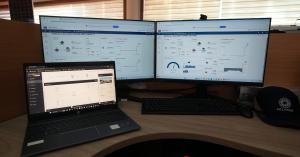
Solaren’s commercial installations incorporate monitoring integration as a standard design element. System performance data feeds into client-accessible dashboards, and threshold alerts are configured to trigger intervention the moment abnormal performance or a system fault is identified.
About Solaren Renewable Energy Solutions Corporation
Solaren Renewable Energy Solutions Corporation is a DOE-accredited and PCAB-licensed solar engineering, procurement, and construction company with headquarters in Tarlac, Philippines. The company has deployed more than 85 megawatts across roughly 2,500 commercial and industrial solar installations. Solaren is a recipient of the Asian Power Award for Solar Power Project of the Year and has counted Toyota, Oishi, McDonald’s, and Dunkin’ among its clients. For additional information, visit https://solaren-power.com
Media Contact
Solaren Renewable Energy Solutions Corporation
Tarlac, Philippines
Website: https://solaren-power.com
Ronnie Lorenzo
Solaren Renewable Energy Solutions Corp.
+63 917 879 6037
email us here
Visit us on social media:
LinkedIn
Instagram
Facebook
YouTube
X