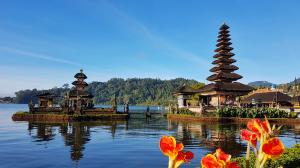
In Indonesia’s competitive resort property market, buyers have long faced a trade-off: own a holiday villa, or treat it purely as a rental asset. ARYA Properties is now challenging that binary choice with a model that lets owners have both.
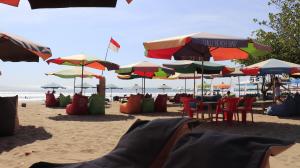
Rather than building standalone villas and leaving owners to fend for themselves, ARYA Properties develops entire resort communities where construction is just the starting point. The company integrates professional hospitality and property management into every project from the ground up, ensuring that owners are not left managing bookings, maintenance, or guest services on their own.
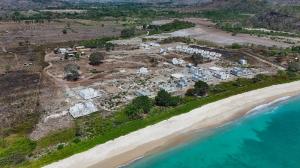
One example of this nature-led approach is ARYA Sumba – Weekacura, a project set among rice fields and greenery near the Waikacura Waterfall, designed to blend into the surrounding landscape.
Also worth a look: AIM Robotics puts Canadian-made drone defence tech to the test at DND sandbox and HR for Health and Kwikly team up to solve dental staffing crisis with compliance-first hiring.

ARYA Sumba – Kodi, the group’s first operating resort, already demonstrates how villa ownership can work within a broader hospitality and resort-management ecosystem. It has 53 villas ready for stays and has welcomed more than 1,400 domestic and international guests since 2025.

ARYA Properties combines owner-stay flexibility with professional resort management across its growing Indonesian property portfolio.
“Building the villa is only one part of the business. That requires hospitality, not only construction.” — Petr Hemerka, CEO & Founder of ARYA Properties and ARYA Resorts
BALI, INDONESIA, November 5, 2026 /EINPresswire.com/ — For many buyers, investing in a holiday property presents an unusual compromise. The property may technically belong to them, but maximizing rental performance can mean limiting how often they are able to actually enjoy it.
ARYA Properties is taking a different approach.
Across applicable projects within its Indonesian portfolio, the developer allows owners to stay in their own property without a fixed annual owner-stay allocation, giving them greater flexibility to decide whether their villa functions as an investment, a second home, or a combination of both. This approach reflects a wider philosophy behind ARYA Properties: a resort investment should not have to become an asset that its owner rarely gets to experience personally.
“People invest in Indonesia for different reasons,” said Petr Hemerka, CEO and Founder of ARYA Properties and ARYA Resorts. “Some are focused primarily on the business side. Others want a place where they can spend several months every year. Many want both. We wanted our model to give owners more freedom to decide how they actually use their property.”
Rather than developing individual villas that owners must manage independently, ARYA Properties builds properties within wider hospitality environments operated together with sister company ARYA Resorts. The group’s involvement extends from property development through to resort and villa management, reservations, reception, guest services, food and beverage, activities, promotion and ongoing operations. This structure is intended to allow owners to step away from the day-to-day responsibilities normally associated with operating a holiday rental.
ARYA’s publicly available Sumbawa project materials, for example, state that owners can choose between living in their villa, renting it as part of the resort, or combining both approaches, with ARYA handling the rental operation when the property is placed into the hotel system.
The model becomes particularly relevant in resort destinations, where investment performance depends on considerably more than the villa itself. A guest choosing where to stay may consider restaurants, activities, transportation, service standards, the surrounding environment and the overall resort experience alongside the accommodation. ARYA therefore develops supporting facilities around its properties rather than relying solely on villa inventory.
At ARYA Sumba – Kodi, the group’s first operating resort, those facilities include NINO Restaurant & Bar and Weiyo BeachClub alongside island activities and guest services. Since 2025, the resort has welcomed more than 1,400 domestic and international guests, with 53 villas ready for stays.
For owners, this creates a distinction between owning a standalone holiday villa and participating in a broader hospitality operation. “Building the villa is only one part of the business,” Hemerka said. “If people are going to rent it when they are not using it, there needs to be a reason for guests to choose the resort, stay longer, spend time there and hopefully return. That requires hospitality, not only construction.”
ARYA also applies shared-income structures within applicable resort developments. Under this approach, an owner’s rental income is designed to participate in wider project performance rather than depending exclusively on whether one particular villa receives a specific guest booking. The detailed structure varies by project and is governed by the respective contractual and financial documentation. The concept responds to one of the practical concerns that can arise when individual units within a resort compete for bookings. Guest preferences may vary according to villa size, location, travel party and availability, meaning that demand may not be distributed equally across every unit at every point in the year.
At the same time, ARYA’s model preserves the owner’s ability to personally use the property. Across its portfolio, accommodation options range from Glamp Villas through one-, two- and three-bedroom villas, giving buyers different combinations of property size, lifestyle use and rental positioning. In Sumbawa, for example, the company’s published portfolio includes Glamp Villas alongside larger villa formats within the same wider resort concept.
This flexibility is becoming increasingly relevant as second-home ownership and hospitality investment begin to overlap. For some owners, a property in Indonesia may primarily be a financial asset. For others, it may be somewhere to spend part of the year. For another group, the attraction is precisely that the property can perform both roles.
ARYA Properties believes those motivations do not necessarily need to be separated. “When someone buys a villa in a place like Sumba, Lombok, Sumbawa or Bali, there is usually an emotional reason as well as a financial one,” Hemerka said. “They chose that destination because they actually want to be there. We don’t think owning an investment property should mean losing that connection.”
ARYA Properties currently develops projects across Bali, Sumba, Lombok and Sumbawa, supported by ARYA Resorts on the hospitality and operational side. Together, the two companies employ more than 600 people across development, construction, management and resort operations. As the portfolio expands, the group’s objective is to continue developing properties that can function simultaneously as professionally operated hospitality assets and places their owners can personally enjoy.
Because for ARYA, the definition of a successful holiday property is not simply whether somebody else wants to stay there. It should also remain somewhere the owner wants to return to.
About ARYA Properties
ARYA Properties is an Indonesia-based property developer with projects across Bali, Sumba, Lombok and Sumbawa. Together with ARYA Resorts, the company provides services extending from development through hospitality operations and property management.
Its portfolio includes accommodation ranging from Glamp Villas to three-bedroom villas within resort and lifestyle developments across Indonesia.
Sagitta Fahrina
ARYA Properties
Visit us on social media:
LinkedIn
Instagram
Facebook
YouTube
Why it matters: As second-home demand and hospitality investment converge in markets like Indonesia, ARYA’s model offers a template for how developers can bridge the gap between personal use and rental income. By removing fixed owner-stay limits and bundling professional management, the company addresses a core tension that has long frustrated holiday-property buyers — and could reshape expectations for resort villa ownership across the region.