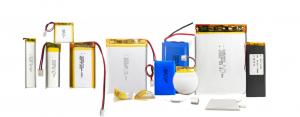
SHENZHEN, GUANGDONG, CHINA, July 26, 2026 /EINPresswire.com/ — Are you in need of a tailored lithium polymer battery pack for medical devices or wearable electronics where space is tight but battery life must stay consistent? In these high-stakes industries that demand smaller, lighter, and mission-critical energy sources, the selection of a Top Lithium Polymer Battery Pack Manufacturer in China directly shapes a product’s market success. Shenzhen Pknergy Energy Co., Ltd(Pknergy) has been steering through this transformation for decades, evolving from a conventional battery maker into a frontrunner in high-density energy solutions. This shift mirrors a larger industry trend where energy density has become the key measure of engineering achievement and procurement standards.
The Background of Energy Density and Industry Obstacles
B2B purchasing teams and hardware engineers regularly face physical limitations when developing products, as device footprints get smaller while power requirements increase. Although processing power and sensor efficiency advance rapidly, battery chemistry tends to improve more slowly. For buyers of specialized equipment, the main difficulty lies in balancing device operation time with physical comfort. Standard power solutions often lead to bulky designs or the need for frequent recharging, both of which hurt the user experience.
When assessing suppliers for critical uses such as portable medical diagnostic tools, IoT sensors, or tiny wearables, buyers must look beyond just rated capacities. The essential factors for selection are volumetric energy density (reaching up to 650 Wh/L in premium polymer versions) and gravimetric energy density (exceeding 240 Wh/kg). Shenzhen Pknergy Energy Co., Ltd tackles these challenges by making energy density a top technical priority. By concentrating on the space efficiency of the lithium polymer (Li-Po) format, the company helps manufacturers get past the physical constraints of their hardware.
Extending the Boundaries of Li-Po Technology
Improving lithium polymer battery performance demands deep knowledge of electrochemistry. The quest for higher energy density involves refining the cell’s internal structure. Pknergy puts significant resources into high-voltage electrochemical systems, which pack more energy into the same space. By safely raising the charge cutoff voltage to 4.4V or 4.45V, these high-voltage cells deliver a 15% to 20% increase in volumetric capacity compared to standard 3.7V systems.
Beyond the chemistry, the physical shape is crucial for modern battery integration. Standard rectangular batteries often create “dead space” inside curved or irregular device casings. To address this, Pknergy focuses on customized battery solutions. Their engineering teams enhance internal space utilization by manufacturing ultra-thin cells with thicknesses starting at just 0.8 mm, along with curved and round battery packs. These custom shapes are built to support 1C to 5C continuous discharge rates while preserving a high round-trip energy efficiency of over 92% during fast charge-discharge cycles.
For industrial buyers, high density must not compromise longevity; therefore, these cells are engineered to deliver a stable cycle life of more than 500 to 800 cycles before capacity drops to 80% of its original value. This technical precision shows an understanding that true energy density must be dependable and lasting throughout the entire device lifecycle.
The Transformation: From Industrial Beginnings to Worldwide Leadership
The path of Shenzhen Pknergy Energy Co., Ltd mirrors the lithium industry’s growth over the past 25 years. This progress can be broken into several distinct phases of professional development:
Foundations and Chemical Expertise (1998–2000s): Although the brand originated in 1998, its official founding in 2006 marked a new period of focus on materials science. The initial emphasis was strictly on stabilizing lithium-ion and lithium polymer cell chemistries, setting the stage for high-voltage and high-capacity architectures.
Growth into Integrated Solutions: As global electronics became more advanced, the company shifted from a parts supplier to a provider of complex lithium battery pack (PACK) solutions. This change drove a broad international reach, with 70% of products now exported to Europe, North America, and Southeast Asia.
Industrial Expansion and Digitalization: The move to a 28,000-square-meter modern industrial facility represents a major leap in capability. Equipped with more than 20 fully automated production lines, the site achieves a daily output of 4 million battery units and an annual production exceeding 1 billion units.
Current Global Market Standing: With a professional team of over 400 experts and service coverage in 150+ countries and regions, Pknergy serves as a reference point for industrial exports. Today, the brand is backed by over 200 global distributors and service providers.
Safety: The Silent Companion of High Energy Density
Raising energy density naturally increases the importance of safety measures. A more concentrated energy source demands stricter management to avoid thermal problems. Pknergy treats safety as an inseparable part of its density advancements. The company implements more than 100 internal quality control processes, achieving 100% AI-driven inspection coverage at critical production stages.
The Battery Management System (BMS) acts as the main safeguard for these high-performance packs. Through a robust 360-degree quality system, Pknergy ensures a leakage rate of less than 0.01%. Furthermore, the company maintains compliance with over 10 major international safety certifications, including UL1642, CE, RoHS, and IEC62133. Such rigorous standards allow Pknergy to offer an industry-leading 10-year warranty on select energy storage products.
Demonstrated Excellence: Global Project Track Record
The true measure of any battery technology is how it performs in real-world conditions. Pknergy has deployed its energy solutions across a wide range of demanding environments. Their logistical efficiency is supported by more than 50 first-class logistics partnerships, ensuring timely delivery for global projects. In the telecommunications sector, their high-capacity battery packs provide reliable backup power for base stations, with a self-discharge rate of less than 1% per year for specific lithium models.
In portable medical monitors and high-end IoT smart devices, Pknergy’s high-density cells have shown outstanding field stability. For instance, in continuous-wear medical patches, their ultra-thin polymer cells deliver up to 72 hours of uninterrupted wireless data transmission without increasing the device’s physical size. Feedback from these global projects indicates that Pknergy battery packs maintain stable energy delivery even under varying ambient temperatures. This reliability record reinforces the company’s position as a preferred partner for complex energy projects.
Conclusion: Energizing Tomorrow
The evolution of Pknergy from its 1990s origins to a sophisticated energy frontrunner highlights the value of technical focus. By dedicating itself to advancing energy density, the company provides the essential power needed for the next generation of portable and industrial technology.
For procurement managers evaluating OEM/ODM partnerships, the critical decision hinges on finding a supplier that can deliver custom dimensions, proven Wh/L efficiency, and strict defect controls. As global demand for green energy continues to rise, the emphasis remains on delivering high-performance solutions that will define the next decade of power.
To learn more about advanced lithium solutions, visit: https://www.pknergy.com/
Shenzhen Pknergy Energy Co., Ltd
Shenzhen Pknergy Energy Co., Ltd
+ +86 13902461252
email us here
Visit us on social media:
Facebook
YouTube
X