The numbers are stark: in rural counties, only 48 percent of Housing Choice Voucher holders successfully leased a home in 2022, compared to 59 percent in urban areas—an 11-point gap that has only widened as national success rates have slipped. For Dr. Michael C. Threatt, a former public housing authority executive and now CEO of Elevate Housing Solutions, the solution lies not in more federal mandates but in smarter, regional cooperation between local agencies and the landlords they depend on.

Dr. Michael C. Threatt Talks About the NAHRO Award-Winning Wiregrass Landlord Tour As a Best Practice to Increase Voucher Utilization in Rural Communities
GREENVILLE, SC, UNITED STATES, November 23, 2026 /EINPresswire.com/ — Dr. Michael C. Threatt, Principal and CEO of Elevate Housing Solutions, LLC, a former public housing authority (PHA) executive and nationally recognized Section 8 housing expert, argues that regionalization, deeper landlord partnerships, and administrative innovation are the keys to improving Section 8 Housing Choice Voucher (HCV) success rates across rural America.
Also worth a look: Snapple house built by co-founder sells for $7.15M after London auction in just 43 days and Concierge Auctions closes $15.8M Longboat Key estate sale in just 31 days.
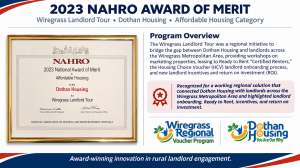
His perspective draws on more than two decades in affordable housing, his 2022 book The Price of Bureaucracy: Removing Section 8 Landlord Pain Points Through the Investment in Technology, and the 2023 National Association of Housing and Redevelopment Officials (NAHRO) Award of Merit-winning Wiregrass Landlord Tour — an initiative he helped launch during his tenure as Chief Operating Officer (COO) at Dothan Housing.
“I’m grateful to God for giving me a voice to advance affordable housing solutions by inspiring innovation that lets voucher holders cash in their Golden Ticket in rural communities across the country,” said Dr. Michael C. Threatt, Principal & CEO of Elevate Housing Solutions, LLC.
NYU Furman Center Research Reveals Rural Voucher Success Rate Disparities
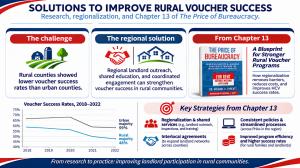
An April 2025 NYU Furman Center study, Success Rates in the Housing Choice Voucher Program: 2018–2022, prepared for the U.S. Department of Housing and Urban Development (HUD), found that national voucher success rates dropped from roughly 66 percent in 2020 to 57 percent in 2022. Meanwhile, the median search time for successful households climbed from 62 to 78 days.
The rural-urban divide was especially pronounced. In 2022, success rates stood at 48 percent in majority-rural counties versus 59 percent in majority-urban counties — a gap of 11 percentage points. The study also found that early-adopting Moving to Work (MTW) agencies achieved a 74.2 percent success rate, compared to just 55.9 percent for other PHAs.
For Dr. Threatt, these numbers underscore fundamental questions about landlord participation, available rental inventory, local administrative capacity, and the real-world hurdles families face after receiving vouchers. He knows the MTW advantage firsthand: he led Dothan Housing into the Landlord Incentives Cohort #3 in 2022 and later launched the Moving Through the Wiregrass with Purpose initiative.
The Price of Bureaucracy: Why Regionalization Matters
In The Price of Bureaucracy, Dr. Threatt argues that landlords operating across neighboring PHA jurisdictions routinely confront different administrative plans, payment standards, software systems, inspection protocols, ownership paperwork requirements, and agency personnel. For apartment owners, property managers, and small “mom and pop” landlords, navigating each PHA’s discretion in administering the Section 8 Program can be a bureaucratic maze.
“It does not make business sense for a PHA that is 10 miles away from another to engage each other through the administratively daunting portability process,” Dr. Threatt wrote in his book.
Specifically, he advocates for regional partnerships, economies of scale, shared services, interlocal agreements, and more consistent practices to “cut the red tape” while maintaining local accountability. Regionalization, he stresses, does not require a merger — it can simply mean sharing expertise and coordinating operations across neighboring PHAs.
From Research to Practice: The Wiregrass Regional Voucher Program
During Dr. Threatt’s leadership at Dothan Housing, an MTW Landlord Incentives agency, the organization expanded its regional voucher efforts in 2021 after receiving 208 vouchers from a neighboring PHA. The Wiregrass Regional Voucher Program (WRVP) supported housing opportunities across five southeast Alabama counties: Henry, Houston, Coffee, Dale, and Geneva. The program was rebranded to reflect these five counties and to better connect with rural landlords and investors.
The region includes Dothan’s urban and suburban rental market alongside smaller rural communities that share housing needs but differ sharply in rental availability, transportation, and administrative resources. Rather than waiting for landlords to come to the agency, Dothan Housing brought Section 8 information directly to the communities.
The 2022 Wiregrass Landlord Tour: Meeting Landlords Where They Are
Between July and September 2022, Dothan Housing launched its Wiregrass Landlord Tour as part of Dr. Threatt’s Attract-Recruit-Retain Landlords framework. The campaign held regional information sessions at public libraries in Enterprise, Abbeville, Elba, Hartford, Midland City, Headland, and Dothan, including two sessions at the Houston County Public Library.
Dothan Housing’s Landlord Liaison Jordon Bonner and Housing Quality Standards (HQS) Inspector Maurice Weems led workshops for current, former, and prospective landlords. Topics included landlord onboarding, property marketing, HQS inspections, Ready to Rent (R2R) Certified Renters, financial incentives, and return on investment. Real estate investors and landlords could speak directly with agency staff about how the Section 8 Program benefits participating landlords.
2023 NAHRO Award of Merit Recognizes Landlord Innovation
Dothan Housing’s initiative received the 2023 NAHRO National Award of Merit in the Affordable Housing Category. The recognition highlighted a working strategy to connect rural landlords with a regional voucher program and make participation easier to understand.
For Dr. Threatt, the award validated an essential lesson: Recruiting landlords requires more than announcements and applications. PHAs must engage landlords personally, explain financial opportunities, respond to concerns, and retain them through professional customer service.
HUD’s 2023 Regionalization Notice Provides a Policy Pathway
On April 7, 2023, HUD issued Notice PIH 2023-08, Process and Requirements for Agency Regionalization under the Moving to Work (MTW) Demonstration Program. The notice describes ways eligible MTW agencies may collaborate with neighboring PHAs through voluntary transfers, consolidation, or management agreements, subject to HUD approval.
HUD identifies potential benefits including economies of scale, unified policies, shared inspections, improved mobility, and reduced administrative burdens. Under certain management agreements, partner PHAs can retain separate organizational identities while benefiting from coordinated administration. This public policy supports the broader argument in Dr. Threatt’s book.
Reducing Portability Red Tape and Strengthening Rural Capacity
Portability permits eligible voucher holders to rent outside their original PHA jurisdiction, but transferring documents, billing arrangements, and communication between sending and receiving agencies can be cumbersome. Landlords with properties in several neighboring counties may also confront different requirements from each PHA.
Dr. Threatt recommends coordinating landlord outreach and education, sharing specialized staff and inspections where permitted, aligning policies, using modern technology, and establishing interlocal agreements. These approaches can give smaller agencies access to expertise they could not afford independently, and help landlords participate across a wider rental market.
Dr. Threatt concluded with this statement: "The Wiregrass Landlord Tour was more than a series of workshops. It was a regional model to meet landlords where they are, reduce the bureaucracy, and expand housing choice."
Dr. Michael C. Threatt
Elevate Housing Solutions, LLC
+1 864-423-1285
Visit us on social media:
LinkedIn
Instagram
Facebook
YouTube
X
HQS INSPECTION EXAMPLE
Why it matters: With national voucher success rates falling to 57 percent and rural areas lagging even further, the regionalization model championed by Dr. Threatt offers a practical, policy-backed path to closing the urban-rural gap. If more PHAs adopt shared services, coordinated landlord outreach, and consistent administrative practices, thousands of voucher holders in underserved communities could finally turn their housing subsidy into an actual home.