Cyber insurance is no longer a niche add-on for corporate risk managers — it is becoming a cornerstone of how businesses protect themselves in an era of relentless digital attacks. A new deep-dive report from The Business Research Company lays out just how fast this sector is scaling, and which players and regions are set to dominate the next half-decade.
Cybersecurity Insurance Market Report

Cybersecurity Insurance Market Analysis
Also worth a look: AI in business market to top $1 trillion by 2030, Asia-Pacific leads regional growth and TBCASoft’s HIVEX program turns cross-border payments into a retail growth engine.
The Business Research Company’s Cybersecurity Insurance Global Market Report 2026 – Market Size, Trends, And Forecast 2026-2035
LONDON, GREATER LONDON, UNITED KINGDOM, October 26, 2026 /EINPresswire.com/ — As digital threats grow more frequent and sophisticated, businesses worldwide are turning to cybersecurity insurance as a vital financial safety net. The market’s expansion mirrors a broader shift in how companies perceive and manage cyber risk. This analysis examines the sector’s projected size, leading regions, key market segments, growth catalysts, dominant players, and the opportunities that lie ahead.
Cybersecurity Insurance Market Size in Context of the Larger Insurance Industry
The cybersecurity insurance market is forecast to surpass $51 billion by 2030. That figure, while substantial, still represents only a sliver of the broader insurance landscape — roughly 0.4% of the overall Insurance market, which is projected to reach about $11,437 billion in the same year. Within the Financial Services industry, expected to grow to $50,609 billion by 2030, cyber insurance accounts for nearly 0.1% of total value, underscoring its emerging but still limited footprint.
Request A Free Sample Of The Cybersecurity Insurance Market Report
https://thebusinessresearchcompany.com/sample_request?id=17592066&type=smp&name=Cybersecurity%20Insurance%20Market%20Report%202026&utm_source=EINPresswire&utm_medium=Paid&utm_campaign=Oct_PR
North America Poised to Lead the Cybersecurity Insurance Market by 2030
North America is expected to take the lead in the cybersecurity insurance market by 2030, with projected revenues of $20 billion. That would represent a significant jump from $9 billion in 2025, driven by a compound annual growth rate (CAGR) of 18%. The region’s momentum is fueled by frequent ransomware incidents and sophisticated cyber threats targeting enterprises, growing corporate awareness of cyber risk transfer options, widespread adoption of digital business models and cloud infrastructure, rising demand for incident response and risk assessment services, specialized insurance products tailored for small and medium-sized businesses, and robust collaboration among insurers, cybersecurity vendors, and regulatory bodies across the United States and Canada.
Germany to Dominate at the Country Level in Cybersecurity Insurance Market by 2030
On a country-by-country basis, Germany is poised to hold the largest share of the cybersecurity insurance market in 2030, with a valuation of $2 billion. The German market is projected to climb from $1 billion in 2025 at a CAGR of 19%. Growth is underpinned by elevated cyber risk exposure in the industrial and manufacturing sectors, increased adoption of cyber insurance among small and medium enterprises, rising demand for coverage against business interruptions and operational technology-related risks, ongoing digital transformation efforts across key industries, a stronger focus on managing third-party risks and supply chain security, and Germany’s advancing cybersecurity awareness and risk management frameworks.
Access The Detailed Cybersecurity Insurance Market Report Here
https://thebusinessresearchcompany.com/report/cybersecurity-insurance-global-market-report?utm_source=EINPresswire&utm_medium=Paid&utm_campaign=Oct_PR
Dominance of Stand-alone Insurance Segment in Cybersecurity Insurance Market
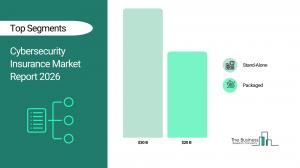
The cybersecurity insurance market is split into two primary insurance types: packaged and stand-alone. The stand-alone segment is projected to be the largest, accounting for 60% of the market — or $30 billion — by 2030. Demand for stand-alone policies is climbing because organizations increasingly require customized cyber risk coverage, prefer dedicated policies that address specific cybersecurity threats, face increasingly complex cyber risks that demand specialized insurance, and larger enterprises with intricate digital ecosystems are expanding adoption. Additionally, there is a growing emphasis on thorough risk assessment and underwriting, along with broader availability of products covering ransomware, data loss, and operational disruption.
Segmentation by Coverage, Solutions, and Organization Size
Beyond insurance type, the cybersecurity insurance market is segmented by coverage types, including data breach and cyber liability. The market is also categorized by components into solutions and services, while organization size segmentation distinguishes between large enterprises and small and medium-sized enterprises (SMEs).
Sustained Market Growth with a 19% CAGR Expected through 2030
The cybersecurity insurance market is forecast to achieve a robust CAGR of 19% leading up to 2030. This accelerated expansion signals the growing importance of cyber risk mitigation as digital threats become more frequent and sophisticated.
Factors Driving Cybersecurity Insurance Market Expansion
The rising incidence of cyberattacks stands out as a key driver of market growth. Increasing financial damages from ransomware, phishing, malware, and data breaches are pushing organizations across all sectors to adopt cybersecurity insurance for financial protection, regulatory compliance, and business continuity. The growing sophistication of attacks targeting critical infrastructure, cloud environments, and digital platforms is prompting enterprises to transfer cyber-related financial risks through insurance policies. This trend contributes approximately 1.8% to the market’s annual growth.
Regulatory compliance is another crucial driver encouraging organizations to pursue cybersecurity insurance. Stricter data protection laws, privacy regulations, and industry-specific mandates require companies to cover liabilities, breach notifications, legal fees, and penalties. As regulatory frameworks become more rigorous worldwide, enterprises are strengthening their risk management strategies and securing insurance coverage to mitigate potential financial and operational impacts. This factor adds around 1.6% to yearly market growth.
The rapid pace of digital transformation and widespread cloud adoption also accelerates demand for cybersecurity insurance. Expanding attack surfaces and cyber risk exposure arise as organizations migrate to cloud platforms, deploy connected devices, and embrace remote work models. These shifts generate new vulnerabilities, making cyber insurance an essential component of enterprise risk management to safeguard financial stability and operational resilience. This element supports about 1.5% of the annual market growth.
Key Growth Opportunities in Packaged and Stand-alone Cybersecurity Insurance Markets
Significant expansion opportunities exist within both the packaged and stand-alone insurance segments, which together are expected to contribute over $30 billion in market value by 2030. Factors driving this growth include integrating cyber insurance with enterprise risk management, rising demand for financial protection against complex digital liabilities, growing use of proactive cyber risk assessments, expanding coverage for emerging technologies and connected systems, increased partnerships between insurers and cybersecurity providers, and progress in data-driven underwriting models. These trends highlight an intensified focus on enhancing cyber resilience, organizational preparedness, and business continuity amid evolving threats.
The packaged insurance segment is set to grow by $12 billion, while the stand-alone segment is projected to increase by $18 billion between 2025 and 2030. The market features a blend of global insurance giants and specialized cyber risk management firms that emphasize advanced risk assessment frameworks, customized policies, incident response solutions, and improved underwriting capabilities to meet evolving digital security demands. Data protection regulations, rising cyber risks, and integration of analytics and threat intelligence remain key competitive differentiators.
Munich Reinsurance Company Leads the Cybersecurity Insurance Market
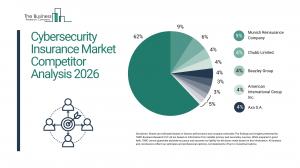
Munich Reinsurance Company was the leading player in global cybersecurity insurance sales in 2025, holding a 9% market share. Its reinsurance division offers comprehensive cyber risk coverage, risk assessment services, underwriting expertise, and reinsurance support that help businesses manage cyber threats, data breaches, and related security challenges.
Prominent Players Shaping the Cybersecurity Insurance Market
Beyond Munich Re, other important companies active in this space include Chubb Limited, Beazley Group, American International Group Inc., Axa S.A., Allianz SE, Swiss Reinsurance Company Ltd., Lloyd’s of London Ltd., The Travelers Companies Inc., Berkshire Hathaway Specialty Insurance, AXIS Capital Holdings Ltd., CNA Financial Corporation, QBE Insurance Group Limited, The Hartford Financial Services Group Inc., Starr International Companies Inc., Markel Group Inc., Hiscox Inc., Aspen Insurance Holdings Ltd., Aon PLC, Arthur J. Gallagher & Co, Lockton Companies Inc., and Tokio Marine Holdings Inc.
Moderate Market Concentration Characterizes the Cybersecurity Insurance Industry
The cybersecurity insurance sector is somewhat concentrated, with the top 10 players accounting for 38% of market revenue in 2025. Barriers to entry include stringent cybersecurity regulations, complex risk evaluation, evolving cyber threat landscapes, data protection compliance requirements, and the necessity for dependable cyber risk management and insurance services. Leading companies maintain notable shares through diverse product portfolios, strong risk assessment capabilities, global underwriting networks, and continuous innovation in cyber risk solutions. As demand for cyber risk protection, breach coverage, regulatory compliance, and incident response grows, strategic partnerships, product development, and geographic expansion are expected to bolster their competitive standing.
Top Market Shareholders in 2025 Include
– Munich Reinsurance Company (9%)
– Chubb Limited (6%)
– Beazley Group (4%)
– American International Group Inc. (4%)
– Axa S.A. (4%)
– Allianz SE (3%)
– Swiss Reinsurance Company Ltd. (3%)
– Lloyd’s of London Ltd. (2%)
– The Travelers Companies Inc. (2%)
– Berkshire Hathaway Specialty Insurance (1%)
Key Raw Material and Technology Providers Supporting Cybersecurity Insurance
Leading raw material and technology suppliers enabling cybersecurity insurance solutions include companies such as Microsoft Corporation, IBM Corporation, Cisco Systems Inc., Palo Alto Networks Inc., Fortinet Inc., CrowdStrike Holdings Inc., Check Point Software Technologies Ltd., Zscaler Inc., Broadcom Inc., CyberArk Software Ltd., Okta Inc., SentinelOne Inc., Gen Digital Inc., Trend Micro Incorporated, Sophos Limited, Trellix Inc., Rapid7 Inc., Tenable Holdings Inc., Qualys Inc., Cloudflare Inc., Akamai Technologies Inc., F5 Inc., Proofpoint Inc., Netskope Inc., and Darktrace plc.
Major Wholesalers and Distributors Facilitating Market Reach
Key wholesalers and distributors in the cybersecurity insurance ecosystem include Ingram Micro Inc., Tech Data Corporation, Arrow Electronics Inc., Avnet Inc., TD SYNNEX Corporation, ScanSource Inc., Exclusive Networks SA, Westcon Group, Redington Limited, ALSO Holding AG, Esprinet S.p.A., Bechtle AG, Softchoice Corporation, CDW Corporation, Insight Enterprises Inc., SHI International Corp., Computacenter plc, NTT Ltd., Logicalis Group Limited, Dimension Data Holdings Limited, Synnex Corporation, D&H Distributing Company, Mindware FZ LLC, ASBIS Enterprises PLC, and EET Group A/S.
Primary End Users Across Various Industries
The major end users of cybersecurity insurance include large financial institutions like JPMorgan Chase & Co., Bank of America Corporation, Citigroup Inc., Wells Fargo & Company, Goldman Sachs Group Inc., Morgan Stanley, HSBC Holdings plc, and Barclays plc. Retail and consumer-focused firms such as Walmart Inc., Target Corporation, The Home Depot Inc., and Costco Wholesale Corporation are also key users, alongside healthcare organizations including UnitedHealth Group Incorporated, HCA Healthcare Inc., Mayo Clinic, and Cleveland Clinic. Leading multinational corporations like Pfizer Inc., Johnson & Johnson, General Motors Company, Toyota Motor Corporation, Siemens AG, General Electric Company, and service providers such as Delta Air Lines Inc., FedEx Corporation, and United Parcel Service Inc. are prominent participants.
Competitive Trends Reshaping the Cybersecurity Insurance Market
The market is witnessing transformative strategic partnerships aimed at broadening coverage options, enhancing risk management capabilities, and providing stronger protection against evolving cyber threats. For example, in July 2024, Resilience teamed up with Lloyd’s to expand cyber insurance offerings and increase coverage limits for U.S. customers. This collaboration strengthens underwriting capacity and delivers broader protection to support businesses in managing financial losses from cyber incidents.
Strategies Companies Use to Maintain Market Leadership
Market leaders are focusing on developing advanced cybersecurity risk management solutions to improve protection and resilience. They are leveraging AI-driven cyber risk assessment models to boost coverage accuracy and risk evaluation efficiency. Efforts to expand cybersecurity insurance adoption among businesses are strengthening preparedness and recovery capabilities. Moreover, integrating artificial intelligence technologies enhances threat detection and risk analysis, positioning companies to better serve evolving customer needs.
What’s new in our 2026 market reports:
• Market attractiveness scoring and analysis
• Total addressable market (TAM) analysis
• Company scoring matrix graphics and tables
• Excel dashboards
• Market hotspots infographics
• Key technologies and future trends
• Updated graphics and tables
Learn More About The Business Research Company
The Business Research Company (www.thebusinessresearchcompany.com) is a leading market intelligence firm renowned for its expertise in company, market, and consumer research. We have published over 30,000+ reports across 27 industries and 60+ geographies. Our research is powered by 1,500,000 datasets, extensive secondary research, and exclusive insights from interviews with industry leaders.
We provide continuous and custom research services, offering a range of specialized packages tailored to your needs, including Market Entry Research Package, Competitor Tracking Package, Supplier & Distributor Package and much more.
Disclaimer: Please note that the findings, conclusions and recommendations that TBRC Business Research Pvt Ltd delivers are based on information gathered in good faith from both primary and secondary sources, whose accuracy we are not always in a position to guarantee. As such TBRC Business Research Pvt Ltd can accept no liability whatever for actions taken based on any information that may subsequently prove to be incorrect. Analysis and findings included in TBRC reports and presentations are our estimates, opinions and are not intended as statements of fact or investment guidance.
Contact Us:
The Business Research Company
Americas +1 310-496-7795
Europe +44 7882 955267
Asia & Others +44 7882 955267 & +91 8897263534
Email: marketing@tbrc.info
Follow Us On:
LinkedIn: https://in.linkedin.com/company/the-business-research-company
Oliver Guirdham
The Business Research Company
+44 7882 955267
info@tbrc.info
Visit us on social media:
LinkedIn
Facebook
X
Why it matters: As cyber threats grow more frequent and costly, this report underscores that insurance is becoming a standard layer of corporate defense — not just for tech giants but for SMEs and industrial players alike. With North America and Germany leading the charge and Munich Re already holding a commanding share, the competitive landscape is set for intense strategic maneuvering through 2030.