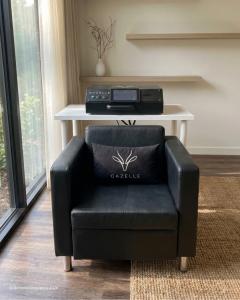
The Gazelle Chair delivers Extracorporeal Magnetic Innervation, an FDA-cleared therapy backed by more than 25 years of published research.
CLEARWATER, FL, UNITED STATES, July 15, 2026 /EINPresswire.com/ — By the time women enter their late 60s, clinical assessments reveal that virtually all—up to 97.7 percent—exhibit some level of pelvic organ prolapse, and around 62 percent of adult women in the U.S., representing roughly 78 million individuals, contend with urinary incontinence. Despite this, many are informed that options are limited to pads, pharmaceuticals, or surgical intervention. Bedrock Bioscience is striving to alter that narrative. The organization today announced the broader rollout of the Gazelle Chair, a non-invasive solution for urinary incontinence and pelvic floor dysfunction now accessible through an expanding network of healthcare providers nationwide. The Gazelle Chair is based on Extracorporeal Magnetic Innervation (ExMI), an FDA-cleared modality supported by over 25 years of peer-reviewed studies and employed to treat more than 15,000 patients throughout the technology’s history.
“For years, I believed that leaking while laughing or running was just an unsolvable part of motherhood — I reached the point where I needed four pads just to get through a 30-minute jog. I was too embarrassed to talk about it, and the surgical options I was given felt like a risk I wasn’t willing to take. After just seven sessions in the Gazelle Chair, the change has been life-changing. I’ve been pad-free for months and have regained the freedom to run and live my life without fear.”
— Kim, Gazelle Chair patient
Individual results may vary.
Urinary incontinence impacts close to 62 percent of adult women across the United States—approximately 78 million individuals—per a 2022 peer-reviewed analysis of CDC survey data featured in Urogynecology (previously Female Pelvic Medicine & Reconstructive Surgery; Patel et al., 2022). Moreover, the root issue becomes nearly universal with advancing age: upon clinical examination, up to 97.7 percent of women display some form of pelvic organ prolapse—a weakening of the identical pelvic floor muscles—with both occurrence and intensity rising over time (Lousquy et al., 2009). Despite the prevalence of these conditions, numerous women silently endure them for years, frequently believing their sole alternatives are invasive procedures, ongoing medication, or indefinite acceptance. The Gazelle Chair aims to offer women and their clinicians a third pathway: a clinically investigated, in-office treatment requiring no recovery period and no interruption to everyday routines.
“Too many women are told that bladder leakage is simply something they have to accept after childbirth or menopause. It isn’t. ExMI has more than two decades of clinical evidence behind it, and through the Gazelle Chair we can now offer women a non-invasive, in-office option that involves no surgery, no medication, and no downtime. For providers, it’s a chance to finally address something their patients have been struggling with quietly for years.”
— Clinical Advisor, Bedrock Bioscience
During a Gazelle Chair session, the patient remains fully clothed as a bio-electric magnetic field penetrates up to four inches into the body, activating the nerves and muscles of the pelvic floor. These pulses induce controlled contraction and relaxation of the muscles, re-establishing the communication between the brain and pelvic floor over the treatment period. Since ExMI requires no skin contact and no anesthesia, individuals can return to normal activities immediately following a 20-minute session.
The clinical evidence underpinning the ExMI technology in the Gazelle Chair extends over 25 years. A 2020 randomized controlled trial published in BioMed Research International contrasted ExMI with standard pelvic floor muscle training, revealing significant enhancements in continence and quality-of-life metrics among participants who received ExMI (Weber-Rajek et al., 2020). That investigation is one of 46 published studies on ExMI listed at gazellechair.com/clinical-studies, covering urology, urogynecology, and pelvic rehabilitation research. ExMI holds two 510(k) clearances from the U.S. Food and Drug Administration, is categorized as a Class II powered muscle stimulator, and every Gazelle Chair is manufactured in the United States under ISO-13485 quality standards. As with any clinical therapy, individual results may vary.
As with any magnetic stimulation therapy, ExMI is not appropriate for every patient. Pregnancy, a copper intrauterine device, ferromagnetic implants, a cardiac pacemaker, and severe cardiac arrhythmia are contraindications for ExMI treatment. Patients should discuss their full medical history with a provider before beginning treatment.
“I was one of the first ten providers to bring the Gazelle Chair into my practice, and the response has been remarkable. Women have been searching for a real solution for years, and what keeps me excited is the results they get. It takes very little chair time, and the improvement in their quality of life speaks for itself.”
— Dr. J.L., one of the first Gazelle Chair providers
Bedrock Bioscience holds the exclusive license to bring ExMI technology, under the Gazelle Chair brand, to physicians (MDs), chiropractors (DCs), nurse practitioners (NPs), medspas, and wellness and longevity facilities that want to offer their patients a clinically studied, non-invasive option for incontinence. Women can visit gazellechair.com to learn more about the therapy, review the supporting research, and locate a participating provider in their area.
For more information about the Gazelle Chair, including clinical studies and provider information, visit gazellechair.com.
Ricardo Ruiz
Bedrock Bioscience
+1 760-300-8163
email us here
Visit us on social media:
LinkedIn
Instagram
Facebook
YouTube